


Properly Handling Your Catch


We all enjoy catching fish and snapping a great photo to share with our friends and followers. When taking part in this routine it becomes critical to do so with care and urgency. Handling saltwater fish with care during a release is critical to ensure their survival, as improper handling leads to high death rates from stress, physical injury, and infection. Proper technique in releasing your catch keeps fish populations healthy, helps to maintain our ecosystems, and preserves local fisheries for future generations.
Releasing fish the right way dramatically increases their chance of survival. A fish that swims away isn’t necessarily a fish that survives. Stress, lactic acid buildup, internal injury, and improper handling can lead to delayed illness or death hours or even days after their release. By making a few thoughtful adjustments to your technique, you can help ensure these fish live to fight another day.
Redfish are hardy compared to many other inshore species, but they’re still susceptible to overhandling, deep hooking, and stress from warm, low oxygen water (in the summer months). When handling a Redfish be sure to utilize circle hooks especially when fishing with live or cut bait. Try and keep the fish in the water whenever possible to ensure a safe and quick release. Always wet your hands before handling your caught Redfish. When holding your fish for a photo, be sure to use two hands and position them horizontally while supporting underneath the belly. When it comes time to release your Redfish, gently revive them by facing them into the current and lightly moving them side to side so moving water can pass over their gills.
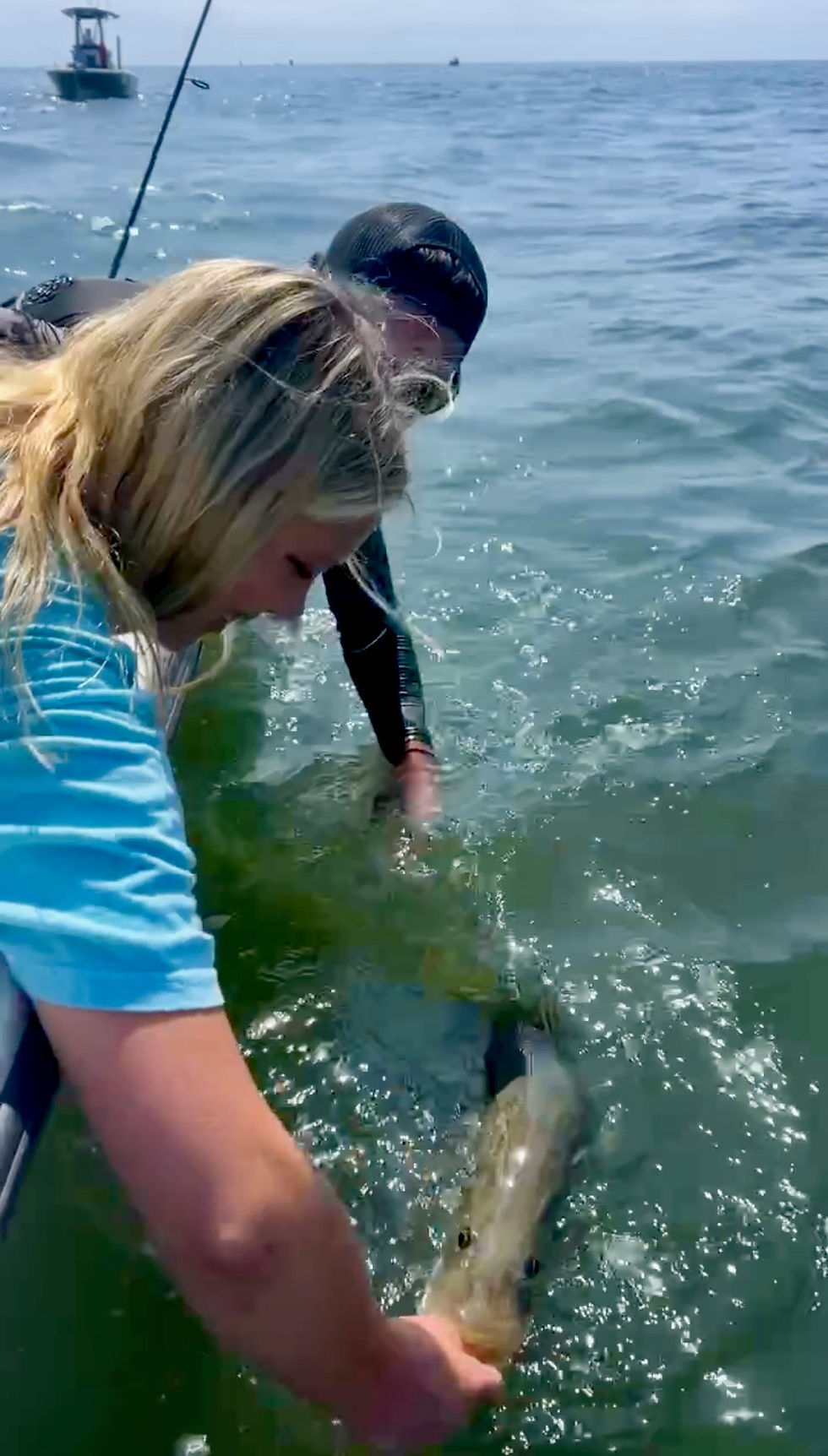
Snook are powerful, sensitive, and temperature-dependent species. This species is especially vulnerable to jaw damage from improper handling, stress from longer drawn out fights, and cold water/weather shock. When targeting Snook, be certain you are using heavier tackle to reduce the time you’re actually fighting the fish. A worn-out Snook is more likely to die after the release if not properly executed. When holding a snook always position them horizontally and never hold/hang them by the jaw alone. In fact, be sure to use two hands to hold your Snook, one supporting the head and the other supporting the belly region. Do your best to limit the Snooks time out of the water to 10 seconds or less. A good method would be to hold you caught Snook in the water until your photographer is in position and ready with the camera to take a photo.
While the Tarpon are often considered the ultimate catch and release species because of their size and strong acrobatic actions, they also require the most sensitive care. Tarpon often suffer from exhaustion after a longer battle. This is why it becomes critical to allow your fish plenty of time to revive while in the water before setting them free. Similar to Snook, position your Tarpon into the current allowing water to flow over their gill plates for an extended period of time before setting them free. Always allow the fish to kick off with power to ensure they’re ready to swim off.
Never remove a Tarpon over the size of 40” from the water as this is the law. Doing so could cause serious damage to this species insides. With any size Tarpon it is ‘Best Practice’ to simply leave the fish in the water even when snapping a photo of your catch. Simply support the Tarpons head and keep the gills submerged when photographing your larger Tarpon.

Jaw injuries are common with this species of fish from the long/hard fights as well the way anglers tend to grab this species to position them for photo. If you are to remove a smaller juvenile Tarpon from the water, be sure to position them horizontally with two hands while supporting their head and belly. Do your best to get that fish back in the water in less than 10 seconds to ensure they swim off nicely. Always avoid touching the Tarpon’s gill plates as they’re extremely sharp and could easily be damaged.
If you see a fish roll belly up upon being released, that is a clear indication that they need additional time to be revived before being set free/swimming off. Please take the time to practice a healthy and proper release of your caught fish. With any species of fish, be sure to handle them with care and urgency to ensure they survive to fight
another day.
As a licensed, insured, and experienced captain, I’d be happy to demonstrate proper releasing tactics with the best of trophy fish our region has to offer. Simply contact me if you’d like to book a charter and learn from the best!
Reel Harmony Fishing Charters
@Capt_Harmony
(386)679-0317


Comments